

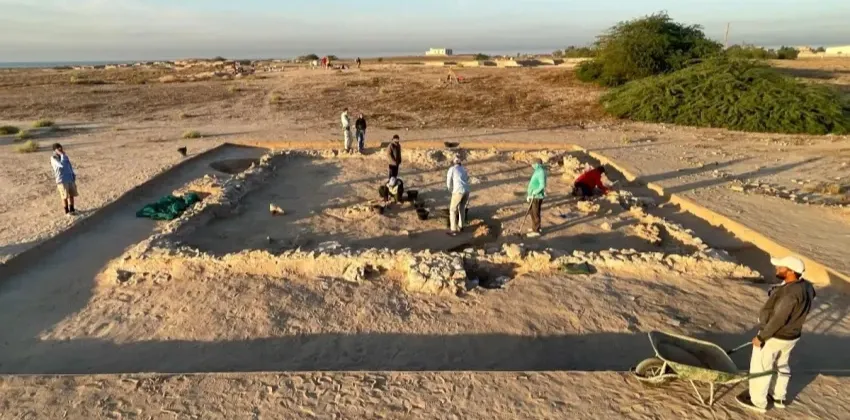
A 4,000-year-old Bronze Age temple has been uncovered on Failaka Island, Kuwait, by a joint excavation team from the Danish and Kuwaiti authorities, led by the Mosgaard Museum. The temple is located to the east of previously discovered structures, such as a palace and the Dilmun temple. Artifacts such as seals and clay vessels were found during the excavation.
The newly discovered temple, measuring 11×11 meters, also contains several altars. The team believes the temple dates back to the early Dilmun culture, around 1900-1800 BCE. This discovery provides crucial evidence of human settlement on Failaka Island, offering insights into the design and architecture of the period.
Dr. Stephen Larsen, head of the Danish excavation team, explained that the discovery would enrich knowledge about the Dilmun civilization and its significant cultural, commercial, and social influence in the Arabian Gulf region. He also highlighted that Failaka Island served as an essential cultural and trading hub during the Bronze Age.
This revelation adds to the understanding of the Bronze Age’s rich history in the region, particularly the thriving and sophisticated civilization that existed more than 4,000 years ago. Additionally, the discovery underscores the importance of Failaka Island in the development of trade and cultural exchange during that period.