
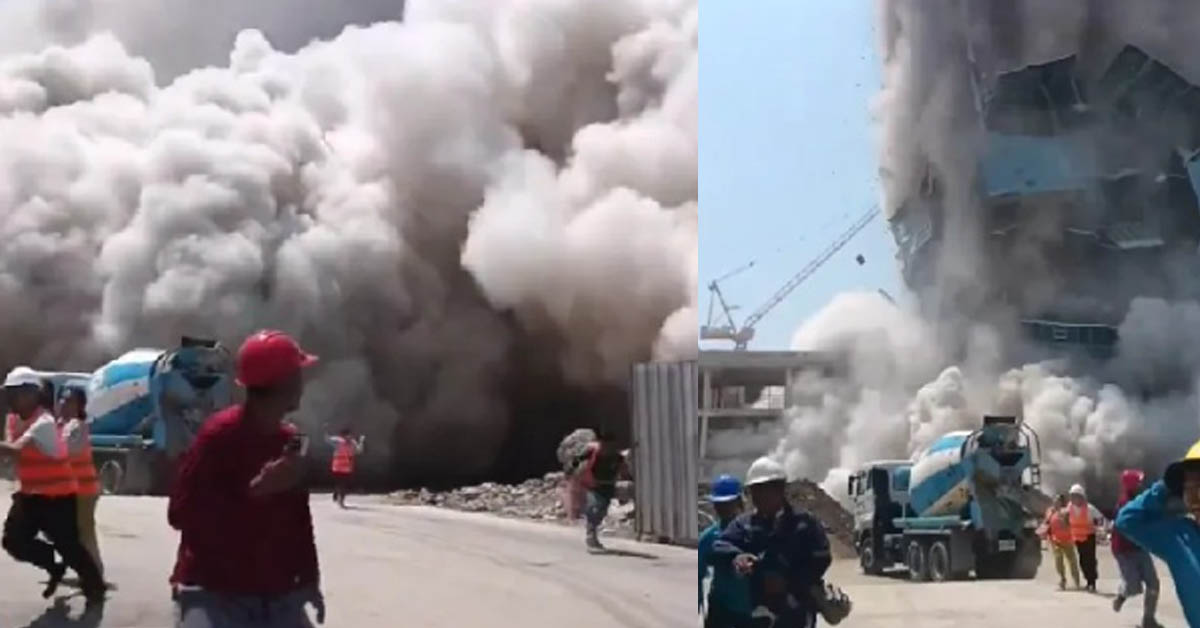
The death toll from the Myanmar-Thailand earthquake is feared to rise significantly as many people were inside buildings for prayers during the fasting period.
A total of 732 people have been injured, and the military chief has warned that the death toll could increase further. The 7.7-magnitude earthquake that struck Myanmar’s capital, Naypyidaw, on Friday has overwhelmed a 1,000-bed hospital. Bodies are being stacked outside the hospital due to the high number of casualties.
Outside the emergency department, injured people lay in rows. Many arrived in cars and pickup trucks, while others were carried on stretchers, their bodies covered in dust and blood.
Myanmar is located on a seismic fault line in Southeast Asia, making it highly vulnerable to earthquakes. Over time, shifting tectonic plates and multiple fault lines have caused devastating disasters. From the deep tremors of the Andaman Megathrust to the continuous movements along the Sagaing Fault, underground forces have repeatedly reshaped the country’s landscape.
Among the casualties are those from a hospital in Naypyidaw. A church in Mandalay collapsed while people were inside for prayers during the fasting period, turning it into a “mass casualty zone.”
Myanmar’s ruling leader, Min Aung Hlaing, warned that the death toll could continue to rise. He declared a state of emergency and appealed for international aid, calling on “any country or organization” to provide assistance.
The earthquake was felt as far as northern Thailand, causing metro and rail services to be temporarily halted in Bangkok. Thai Prime Minister Paetongtarn Shinawatra canceled an official visit to Phuket to attend an emergency meeting. Authorities in Bangkok also declared a state of emergency.