
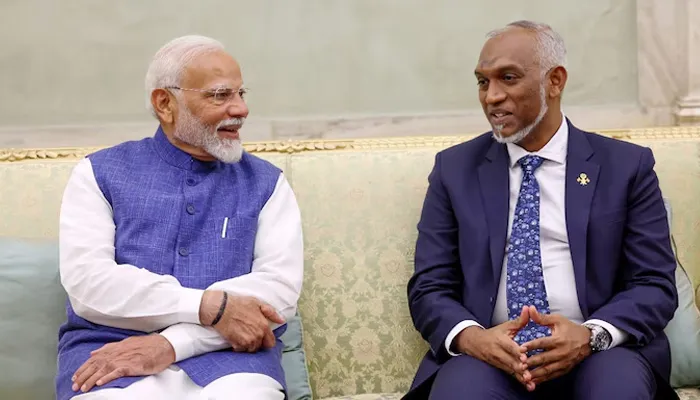
The Maldives is currently looking to strengthen its ties with India as it prepares to introduce the Unified Payments Interface (UPI) to enhance its digital infrastructure. President Mohamed Muizzu announced the decision, stating that the introduction of UPI follows the recommendation of his cabinet. The initiative aims to improve the digital economy and public infrastructure in the country, with India agreeing to support these efforts.
The decision to implement UPI came after the cabinet reviewed a report submitted by the Minister of Economic Development. President Muizzu’s office expressed optimism that UPI transactions would bring significant benefits and changes to the Maldivian economy. A consortium will be formed to facilitate the introduction of UPI, which will include banks, telecom companies, state-owned enterprises, and fintech firms operating in the Maldives. Additionally, a team comprising representatives from the Ministry of Finance, Ministry of Home Affairs, and the Maldives Monetary Authority will oversee the implementation of UPI.
During his recent visit to India, President Muizzu emphasized the need to strengthen diplomatic relations with Prime Minister Narendra Modi. Reports indicate that the Maldives is currently facing a severe dollar shortage, prompting the government to impose new foreign currency regulations. The Maldives Monetary Authority has decided to limit various foreign currency transactions and implement mandatory controls on foreign currency exchanges in the tourism and banking sectors.
According to the new regulations, revenue generated from tourism-related establishments, such as resorts and guesthouses, must be deposited into foreign currency accounts at local banks. Violations of this rule could result in fines ranging from MVR 5,000 to MVR 1 million. The Maldives’ debt stands at 110% of its Gross Domestic Product (GDP), with projections estimating the country’s total external debt to reach $5.57 billion (₹468.2 billion) by 2025 and $10 billion (₹840.6 billion) by 2026.
The diplomatic tensions between the Maldives and India have significantly impacted the tourism sector, a crucial revenue source for the country. In August, the Maldives Monetary Authority implemented stringent dollar regulations in response to the ongoing dollar shortage. Last month, India extended a $50 million interest-free loan to the Maldives, facilitating the repayment of its bonds.
The new regulations stipulate that all foreign currency transactions within the country must be conducted in the official currency of the Maldives, the Maldivian Rufiyaa (MVR), unless specified otherwise. All transactions related to goods, services, fees, rents, and wages must be in MVR, while export and international transactions can still be conducted in U.S. dollars as legally mandated.