
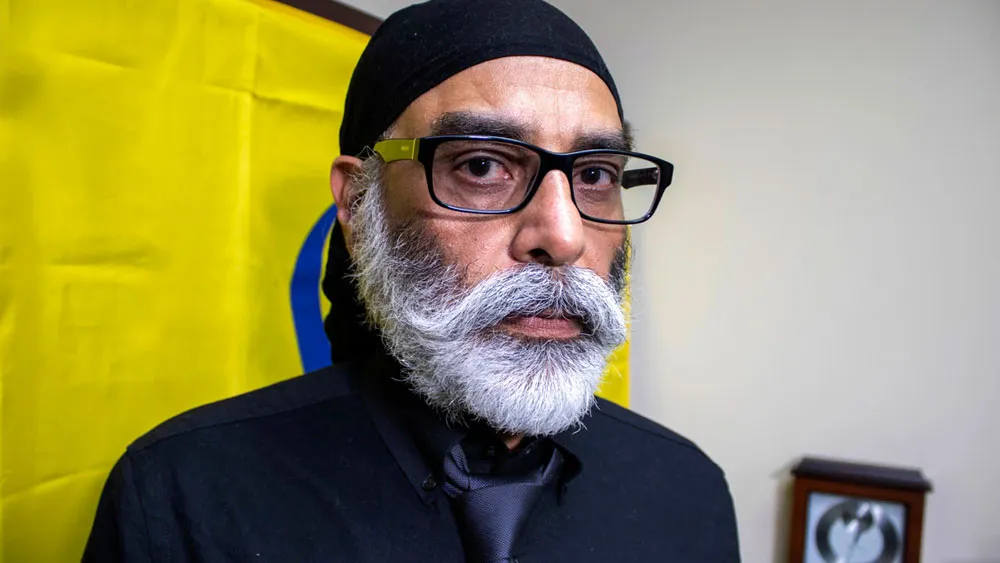
The strained relations between Canada and India are being exacerbated by the activities of Khalistan separatists. Gurpatwant Singh Pannun, a leader of the banned organization Sikhs for Justice (SFJ) and a Khalistan extremist, recently vowed to erase India’s current borders and redraw the map. Pannun’s threats follow Canada’s clear stance on respecting India’s territorial integrity, as stated by Canadian Deputy Foreign Minister David Morrison.
Pannun has threatened to ignite independence movements not only in Punjab but in other Indian states as well, claiming that Khalistan will be established by 2047. His comments came in a video response criticizing Morrison’s earlier remarks before the Foreign Interference Commission, where Morrison emphasized the importance of recognizing India as a unified and integral nation.
Pannun’s rhetoric centers around forming an independent sovereign state of Khalistan in Punjab. He has also made inflammatory statements about launching independence movements in Jammu & Kashmir, Assam, Manipur, and Nagaland. Pannun went as far as urging Chinese President Xi Jinping to reclaim Arunachal Pradesh, falsely claiming the region as part of China, and suggesting that China use military action to achieve this.
The Khalistan separatist movement has seen sporadic support from Pakistan and China, with India alleging that weapons, including Chinese-made rocket-propelled grenades (RPGs), were supplied to terrorists in the Golden Temple, leading to increased tensions.
The persistence of the Khalistan movement in Canada raises questions. Not all Canadian Sikhs support Khalistan, with many viewing it as a non-issue. However, the minority of separatists has managed to maintain political significance. Canadian politicians are believed to be hesitant to alienate Sikh voters, leading to the misconception that all Sikhs in Canada support the Khalistan cause. As Milavesky noted in a past interview, Canadian leaders are wary of losing Sikh votes.
In the 1980s, when the Khalistan movement was at its peak, India dealt with it harshly, resulting in mass arrests and violent incidents. Many who fled India during that time became part of the Sikh diaspora in Canada, where memories of the era continue to fuel the movement. However, support for Khalistan has been waning even among the diaspora, particularly among younger generations who have no personal connection to those events.
While the movement no longer enjoys widespread support, it has found backing from certain international powers. Countries like China and Pakistan continue to provide financial aid and other resources to Khalistan separatists, keeping the movement alive despite limited popularity.