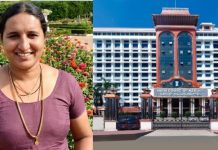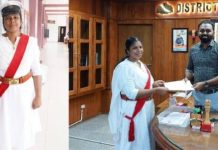

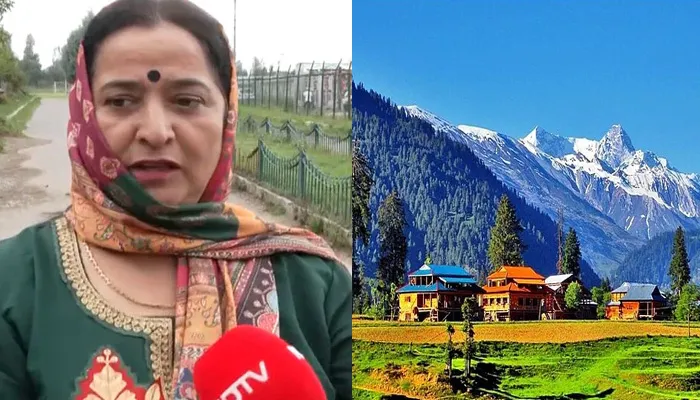
Kashmiri Pandits are becoming proud of a woman named Daisy Raina, who is returning to democracy in Jammu and Kashmir for the first time in the history of three decades, a woman among the Pandits. On arrival, another facet of Modi’s women’s empowerment is revealed as Daisy Raina, the only candidate of the Republican Party of India, a constituent party of the NDA, is making history.
Daisy Raina said that she is contesting for a generation that had to start life on bullets. They are seeking seats from Rajpora constituency in Pulwama.Daisy Raina, who worked in a private company in Delhi, is also the sarpanch of Frisal village in Pulwama. The youth of the village are asking me to go to the assembly as their representative. This is the generation born in the 1990s. Those who had to spend their childhood in fear amidst gunfire. They seemed justified in their demand. So competing, Daisy told reporters.
Pulwama is the soil where the blood of hundreds of innocent people was shed. Many soldiers also sacrificed their lives here for the country. But I don’t think Pulwama will change. We can make a difference. Kashmiri Pandits are a minority here. But that doesn’t seem like a challenge. I work as Sarpanch without anyone for security. Recently we did Shiva Pratishtha at Rajpora. But that didn’t cause any problems, Daisy Raina pointed out. Daisy Raina became the sarpanch here after the abrogation of Article 370 in 2019. Displaced from their homeland three decades ago, the Kashmiri Pandit community is now trying to reconnect with its roots through political engagement. As the election approaches, around 14 Kashmiri Pandit candidates are contesting from Kashmir and more are expected to file their nomination papers in the third phase.
On October 8, when the Jammu and Kashmir election results will be announced, the Kashmiri Pandit community will eagerly await the results. They hope to get representation in the Jammu and Kashmir Assembly to address their concerns, including a dignified return to the Valley and proper resettlement. Traditionally, Kashmiri Pandits contested only the Habba Kadal seat in Srinagar, which has the largest number of Pandit voters. However, this election saw the community widening its focus as candidates contested in Pulwama, Anantnag and North Kashmir in addition to Srinagar.
Unlike previous elections, many parties fielded Kashmiri Pandit candidates, while some contested as independents. PDP spokesperson Mohit Bhan said, “Despite previous barriers, there is renewed enthusiasm for political participation among Pandits. It is good that Kashmiri Pandits are participating.” Sanjay Tikoo, president of the Kashmiri Pandit Sangharsh Samiti, said this is a good change if there is no agency behind it. I have seen how people welcome a woman contesting in Pulwama, but there should be no agenda behind it. People should be encouraged not to do politics, there should have been a consensus when many candidates were contesting in the Habba Sea, and the hope was that some Kashmiri Pandit would be elected as MLA.
Community candidates say they want to work for their community and want their voices heard. They are seeking representation to advocate for their resettlement, alleging that political parties have not had a comprehensive blueprint for their return for the past 35 years. They are hoping that Kashmir’s majority Muslim community will support them. Independent candidate Ashok Kumar urged voters to consider Pandit candidates, stressing that the community has a lot to contribute. He said positive changes such as reduced violence are encouraging voters to move beyond traditional politics.
Two Pandit women are also contesting elections for the first time since the start of terrorism in Kashmir: Daisy Raina from the Republican Party of India, a former sarpanch from Pulwama, and Arti Nehru from Sopore in north Kashmir. Their candidacies represent an important step forward for society.