
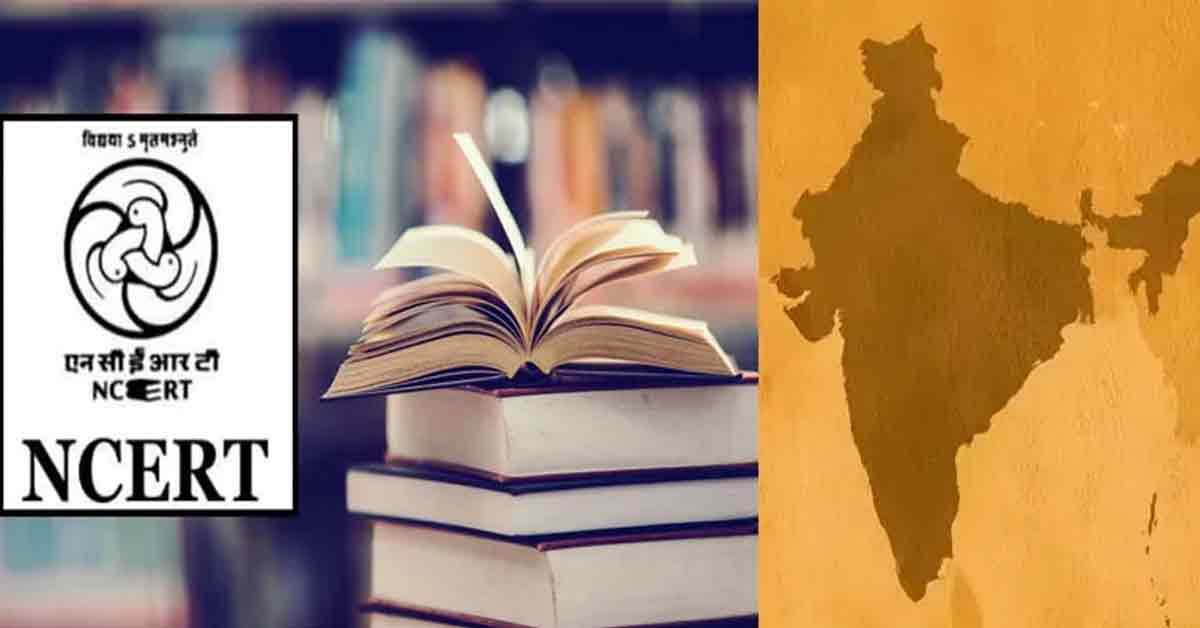
The National Council of Education, Research and Training released the new social science textbook for Class VI on Friday, which contains information every Indian can be proud of. The updated lessons include chapters rooted in the Indian context. It says that the ancient inhabitants of this country called the country as “Bharat” and later foreigners called it India. Also included are passages on the Vedic school and stories from the Upanishads. ‘Exploring Society India and Beyond’ has released an online version on the official website of NCERT. Emphasizing that the name “Bharata” is still in use today, the book notes that it is commonly spelled ‘Bharata’ in northern India and often spelled ‘Bharat’ by the time it reaches southern India.
The book emphasizes that ‘Bharata’ is one of the oldest names in the Vedas and appears first in the Rigveda. “In later literature, several kings named ‘Bharata’ are mentioned…After a few centuries, ‘Bharata’ became the name commonly used for the Indian subcontinent. Foreign visitors or invaders to India mostly adopted names derived from Indus or the Indus River. This gave rise to names like ‘Hindu’, ‘Intoi’ and finally ‘India’. Also, the book mentions that the word ‘Hindustan’ was first used in a Persian inscription about 1,800 years ago and that the name was used by most of India’s invaders to describe the Indian subcontinent. Anyway, the information about India must have reached a Bharata Pauran right at the time of his studies, which would have helped him imbibe the high Indian tradition in religion or communalism. Often gone without
How can a nation be built by someone who is not proud of his ancestors? Why are you living here if you don’t feel proud of yourself? Now Westerners use their generous visa scheme to find good workers. 80% of Indians want to cross the sea and go abroad. There they work like prisoners in a prison. Everyone wants to go abroad. At the same time, we Indians depend on foreign countries for various things. This is not how a nation should be led forward. What’s in a name?” is the question people in the intellectual community are likely to ask. You know the voice is there when you say your name. But the struggle of that voice actually has a psychological basis and a social relevance. Sound exists in this space of air, so it has power. The word Bharat (place of light) has power. This power will change the mind of every patriot. Even though the will of individuals is different, the nation must be able to see a unity, and those who do not need the nation.
Let us quote Sadhguru’s words about how the name Bharat should reflect on an Indian citizen. It is a strategy to establish dominance, a conspiracy to impose slavery. If you look at African American history, the first thing they did after they brought the African people to America was to give them some meaningless names.
The same has happened even to some place names here – Thiruvananthapuram (Ananthapadmanabhan’s land) became “Trivandrum”. “Chennai” became “Madras”. Similarly “Bharat” became “India”. What does this mean? Doesn’t make any particular sense. If you get a meaningless name, you become meaningless. “I have a great tradition and culture, but you have none,” this will be the attitude of the citizen of a foreign land towards the Indian, and we, the cultured ones, will be just a meaningless Indian in his eyes. There is a nationalism lurking in everyone’s mind.
Why let it linger in the back of your mind as a mere thought? This idea must be ignited in your mind and body in such a way that a proper nation will emerge, or the nation will remain only on paper. This is a reality, an unfortunate reality. As soon as the British gave us physical independence in 1947, we should have changed the name of India to the mind-blowing name of Bharat.