
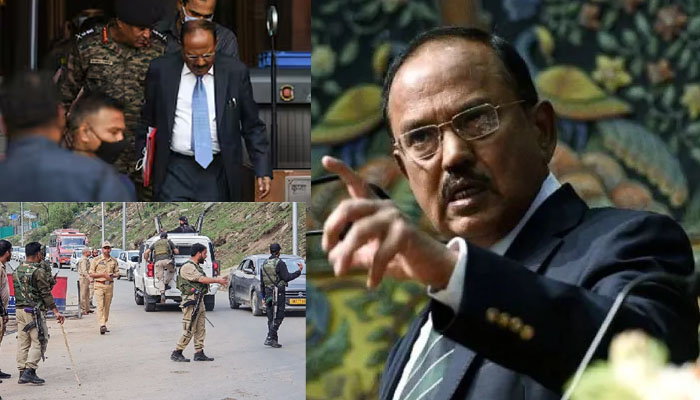
India, under the strategic leadership of National Security Advisor Ajit Doval, is reportedly taking calculated steps to counter potential threats, with intensified focus following recent intelligence leads. Since the 2016 Uri surgical strike, Doval has remained a central figure in India’s counter-terror doctrine, particularly against Pakistan-backed terrorist networks.
According to intelligence inputs, a detailed video of Doval’s office — including aspects of the security setup — was allegedly recovered from a captured terrorist, raising major security concerns. Doval, one of the most heavily guarded officials in India, is often seen as the mastermind behind swift retaliatory actions and decisive military operations.
Security experts in Pakistan interpret Doval’s approach as a doctrine of “proactive deterrence,” where India mirrors and neutralizes the very tactics of terrorism used against it. Since taking office as NSA, Doval has reportedly prioritized strategies that not only deter Pakistan but also destabilize its internal frameworks. Retired Pakistani military personnel have gone so far as to describe him in articles as a one-man army aiming to dismantle and fragment Pakistan from within.
His doctrine has become a key factor shaping Pakistan’s military and strategic calculations. Doval is seen as the embodiment of a “fifth-generation warfare” strategist by the Pakistani army. As Pakistan increasingly finds itself isolated on the global stage, with its links to terrorism under international scrutiny, India’s global image is seen to be strengthening. The 2016 surgical strikes and the 2019 Balakot airstrikes are cited as turning points, shifting global perception and reinforcing international support for India’s stance against terrorism.